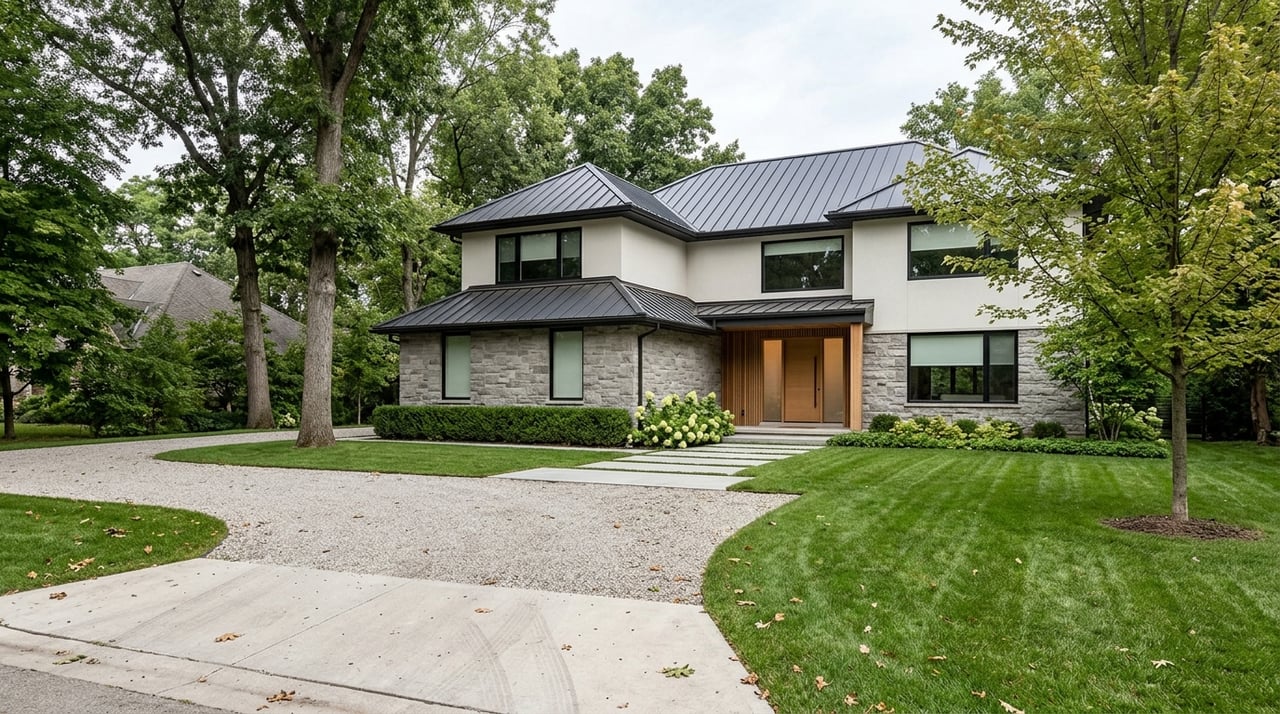
Yorktown Acreage Living vs. Neighborhood Streets: How To Choose
July 9, 2026
July 9, 2026
If you are searching in Yorktown, one of the biggest decisions is not just the house itself. It is the setting around it. A home on a larger parcel can offer privacy and breathing room, while a home on a neighborhood street can make daily life feel simpler and more connected. This guide will help you compare both options in practical terms so you can choose the Yorktown lifestyle that fits you best. Let’s dive in.
Yorktown gives you real variety. The town covers about 40 square miles, has roughly 36,000 residents, five business hamlets, and twelve historical residential neighborhoods. Its zoning ranges from very large-lot districts such as R1-200 at 200,000 square feet down to R1-10 and R1-20 at 20,000 square feet.
That range means your day-to-day experience can look very different from one property to the next. In Yorktown, lot size is tied to privacy, maintenance, drainage, infrastructure, access, and how the home relates to the surrounding area. The town’s Planning Board treats lot layout, street pattern, water supply, sewerage, drainage, recreation, and open space as important parts of neighborhood quality.
A larger-lot home often appeals to you if you want more separation from nearby homes and more outdoor space to enjoy. In a town like Yorktown, that can pair well with an outdoor lifestyle. Local assets include Sylvan Glen Park Preserve with nearly 350 acres, Teatown’s 15 miles of trails, and Franklin D. Roosevelt State Park with picnic, swimming, fishing, and boating amenities.
For some buyers, that extra space creates a sense of calm that is hard to replicate on a tighter street. You may have more room for gardens, play areas, patios, or simply a wooded buffer. If privacy is high on your list, acreage living can feel like a better fit.
More land usually means more responsibility. Yorktown’s Highway Department maintains more than 400 lane miles of road, handles snow and ice removal on roads, sidewalks, and parking lots, maintains street signs and tree work, and runs a free Organic Yard Waste service for residents. The town also schedules leaf-bag and tied-branch collection, which tells you yard debris management is a normal part of ownership here.
That does not mean larger lots are a problem. It means you should think honestly about how much outdoor work you want to handle. Even a beautiful property can feel less enjoyable if the upkeep does not match your time, budget, or lifestyle.
Before you commit to acreage living in Yorktown, look beyond the listing photos and ask practical questions such as:
These details matter because Yorktown’s planning standards specifically call out water supply, sewerage, drainage, and lot harmony as core concerns in subdivision design.
A home on a neighborhood street often creates a different kind of ease. In many cases, you have less land to maintain and a more predictable routine from week to week. If you want a home that supports convenience without giving up suburban character, this setting may check more boxes.
Yorktown’s transportation plan says local residential streets should have low traffic volumes and speeds, minimal truck traffic, and conditions that are safe for cars, pedestrians, and cyclists. The plan also supports traffic calming where it improves safety and quality of life. In other words, the quieter feel of many neighborhood streets is not random. It reflects how the town plans for residential areas.
Neighborhood streets can also feel more plugged into everyday life. Yorktown describes itself as a town with five business hamlets, many parks and open spaces, and community resources such as the library and recreation programs. The North County Trailway also runs about 5.5 miles within town, with access and parking near Town Hall in Yorktown Heights.
If you like being a little closer to town resources, a more traditional street layout may feel more natural. You may spend less time managing the property itself and more time enjoying what is around you.
The main compromise is usually privacy. Homes may sit closer together, and you may notice more passing traffic than you would on a larger parcel set farther back. That said, Yorktown’s subdivision standards try to place driveway access on local streets instead of major roads and use reverse-frontage lots where needed to protect homes from through traffic and nearby nonresidential uses.
That is worth remembering when you compare properties. Two homes can have similar square footage but very different street experiences depending on how the lot is placed and how the surrounding roads function.
In Yorktown, the lot type decision is often tied to commuting. The town does not have its own train stations, so many residents use stations outside town. According to Yorktown’s transportation plan, common station choices include Croton-Harmon, White Plains or North White Plains, Ossining, Peekskill, Golden’s Bridge, and Katonah.
Westchester County also notes that Bee-Line service in the northern county is concentrated in Peekskill, Ossining, and Yorktown. Yorktown’s transportation planning centers arterial access on Route 6, Route 202, and the Taconic State Parkway, along with park-and-ride and bus connections to outside stations.
A larger-lot property may give you more quiet, but it can also place you farther from a hamlet center, bus connection, or your usual route out of town. A home on a neighborhood street may offer a more efficient daily pattern, especially if you commute often or have a schedule built around school, activities, and errands.
When you tour homes, do not just test the drive once. Think about how the location will feel on an ordinary Tuesday morning, in winter weather, or during a busy workweek. Lifestyle fit often comes down to those repeated moments.
It is easy to focus on sale price and lot size, but long-term cost deserves just as much attention. Yorktown’s assessor provides fair and equitable assessed valuations, and the tax receiver says property owners receive two tax bills each year that include town, county, school, and special district taxes.
That means a larger parcel should be evaluated through more than one lens. You will want to understand assessment, available exemptions, and district mix, not simply how much land comes with the home. The smarter comparison is total ownership picture, not just purchase price.
If you feel torn, it helps to step back and define what you want your everyday life to look like. The right answer is usually less about acreage versus neighborhood in the abstract and more about how you want to spend your time.
Acreage living may fit you best if you value:
Neighborhood street living may fit you best if you value:
When buyers compare one larger-lot property with one neighborhood-street property, the wrong comparison can lead to the wrong decision. Try evaluating each home using the same checklist.
This kind of side-by-side review makes the choice clearer. It also helps you separate a home’s emotional pull from its practical fit.
Yorktown offers both larger-lot living and more traditional neighborhood streets because the town itself is varied by design. With multiple zoning patterns, business hamlets, open spaces, and carefully planned residential streets, you do not have to force yourself into one version of suburban life. You can choose the one that supports your priorities.
If you want help thinking through privacy, upkeep, commute, and long-term fit in Yorktown, Pat Palumbo can help you compare homes with a clear, practical lens and a local understanding of how each setting really lives.
Stay up to date on the latest real estate trends.
Buyers and sellers need to have their needs heard in order for their needs to be addressed. What you are really looking for is a real estate therapist. We have come to realize that our training is not only a benefit but in some cases the reason why we are able to truly help our clients.

202 Katonah Ave
Katonah NY 10536