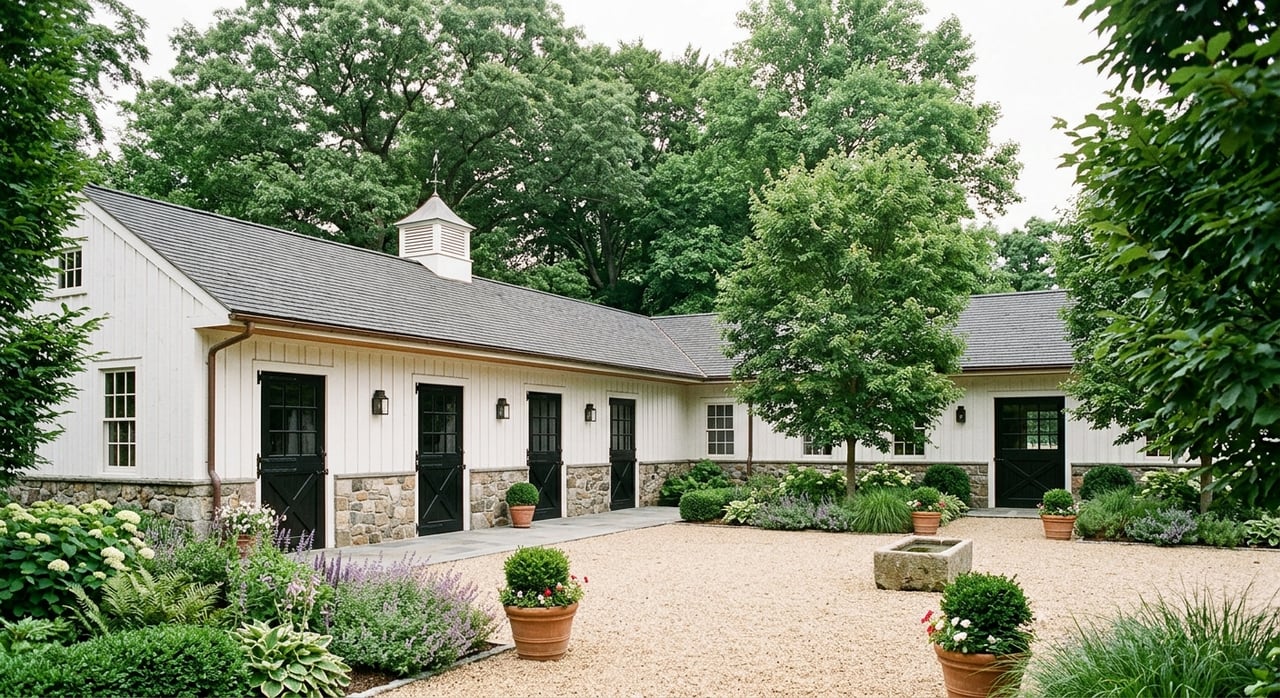
North Salem Equestrian Properties: A Buyer’s Guide
May 14, 2026
May 14, 2026
If you are dreaming about a barn, paddocks, and room to breathe, North Salem deserves a close look. This is not just a town with a few large lots. It is a place where open land, trails, and horse properties are part of everyday life, which makes buying here both exciting and more nuanced than a typical suburban home search. If you want to understand how acreage, horse use, zoning, and property condition can affect your purchase, this guide will help you ask smarter questions before you make an offer. Let’s dive in.
North Salem is one of Westchester County’s most rural towns, with about 5,000 residents across 24 square miles. The town highlights its open space, riding trails, and train access to New York City, which creates a rare mix of country living and commuter convenience.
The town also says the North Salem Open Land Foundation protects more than 1,300 acres, and riders have access to more than 100 miles of trails. That helps explain why equestrian properties and larger parcels are not unusual here. They are part of the town’s identity.
That rural character also shapes the practical side of ownership. North Salem’s comprehensive plan notes that rural areas generally do not have municipal sewer and water because the infrastructure is expensive, so private well and septic systems are especially important on acreage properties.
Before you fall in love with a house and barn, define how you plan to use the property. In North Salem, a private horse property, a boarding stable, and a riding or lesson operation are not treated the same way under local rules.
The town defines a farming operation as a parcel of at least four acres used for crops, livestock, horses, or livery and boarding stables. It separately defines a stable or riding academy as a place where horses are kept for riding, driving, or stabling for compensation or as part of a club, ranch, or similar operation.
That distinction matters because your intended use affects zoning review, permits, and sometimes financing. A quiet residential property with a few horses is a different asset from a property meant to board horses, host lessons, or run events.
The more operational the property will be, the more important your zoning and permit review becomes.
North Salem’s zoning rules can affect how many horses may be kept and whether special approvals are needed. Buyers should confirm the zoning district early instead of assuming horse use is allowed as-is.
According to the town’s zoning tables, in the R-1 district, keeping more than one horse appears as a special-permit use. In the R-4 district, keeping more than two horses appears as a special-permit use. That means horsekeeping thresholds vary by district.
For horse farms, boarding stables, and riding academies, the code also includes detailed special-use standards. These rules cover stall requirements, setbacks, lighting, screening, fencing, and manure removal and storage.
As a general rule, the code says no more than one horse per acre may be permitted on a site. It also requires one stable stall per horse unless a stall is not appropriate for that horse.
A five-acre parcel may sound simple on paper, but that does not automatically mean it works for your plans. The parcel’s district, layout, setbacks, and constraints can all shape what is realistic.
If the property may host horse shows, rodeos, demonstrations, or competitive events tied to the equestrian use, the town treats those activities as principal uses for lot-area and setback purposes. In short, an event property needs a more careful review than a private barn used quietly by the owner.
Accessory uses matter too. North Salem allows customary farm vehicles and horse trailers as accessory uses for boarding stables, riding academies, or properties keeping more than two horses, but they may not be stored or parked within a required yard.
One of the biggest mistakes buyers make is assuming that more acreage always means more value or more flexibility. In North Salem, usable land often matters more than the total number of acres.
Wetlands, watercourses, slopes, access, and zoning limits can reduce how much of the site can actually support a barn, paddocks, arena, or future expansion. A parcel with fewer but more functional acres may fit your goals better than a larger property with heavy constraints.
This also affects financing and appraisal. Fannie Mae says the appraiser must analyze the actual site size, zoning, legal use status, adjoining uses, easements, encroachments, and the effect of environmental or legal constraints on marketability.
The appraisal must consider the entire parcel as it exists, not a hypothetical portion of it. So if a large part of the land is constrained, that may affect how the property is viewed in underwriting and valuation.
Because North Salem’s rural areas generally rely on private systems, well and septic due diligence is a major part of the buying process. This is especially true when you are purchasing a larger parcel with a barn, accessory structures, or land that may have been improved over time.
The town is also strict about permits. North Salem says a building permit is required for construction, repair, movement, removal, or demolition of any building or structure.
The town warns that title searches often uncover older unpermitted sheds, decks, and similar improvements when a property is sold. If unpermitted work is found later, it can trigger a penalty of triple the permit fee up to $1,500, plus legalization costs.
North Salem’s Building Department also oversees site-development-plan compliance, wetlands, tree cutting, fill, blasting, and stormwater rules. That means site condition is not just a maintenance issue. It can affect what you are allowed to change after closing.
Wetlands are one of the most important issues on acreage properties in North Salem. The town’s wetlands rules say regulated activities require a permit, and a septic field or wastewater treatment plant cannot be placed within a wetland or watercourse.
Depending on the proposed work, the town may require a minor or full wetland permit, Planning Board referral, mitigation, monitoring, and as-built plans prepared by a New York licensed professional. That can affect renovations, additions, new outbuildings, drainage work, and site improvements.
This is why a property tour should include more than a quick look at the house and barn. You want to understand where the useful open land is, what areas may be regulated, and how that lines up with your plans.
North Salem says a tree removal permit may be required in several situations, including:
If you are hoping to clear land for pasture or improve sight lines, ask about this before you assume the work is straightforward.
A beautiful barn can be a strong starting point, but the land has to support your day-to-day goals. For horse properties, pasture quality and land management affect both lifestyle and long-term upkeep.
Cornell Extension notes that pasture productivity depends on the number and species of animals, selective grazing, manure and urine, and traffic. It also says rotation, mowing, and soil testing can reduce weeds and improve water quality, while overgrazing can degrade pasture quickly.
For you as a buyer, that means it is smart to look at more than aesthetics. Ask whether the paddocks drain well, whether the pasture appears overused, and whether the layout supports rotation and maintenance.
Financing an acreage or equestrian property can be more complex than financing a standard suburban house. For conventional financing, one key issue is whether the property is residential in nature and whether the use is legal or legal nonconforming.
Fannie Mae says the mortgaged premises must be residential in nature, safe and sound, accessible by roads that meet local standards, served by utilities that meet community standards, and suitable for year-round use. It also says it does not purchase or securitize mortgages on vacant land, agricultural properties such as farms or ranches, boarding houses, or bed-and-breakfast properties.
This does not mean every property with acreage is hard to finance. It does mean that a residential home with equestrian features may be viewed differently from a property operated as a commercial agricultural or boarding use.
For some buyers, tax treatment is an important part of the decision. New York’s agricultural assessment rules can materially affect carrying costs for qualifying land.
The state says land generally must be at least seven acres and used for agricultural production, with gross-sales tests applying. For qualifying commercial horse boarding operations, the land must have at least seven acres, board at least 10 horses, and generate at least $10,000 in gross receipts annually during the relevant lookback period.
There is also a caution here. If land that received an agricultural assessment is later converted to nonagricultural use, a recapture payment can apply within five years if the parcel is in an agricultural district, or within eight years if it is outside one.
New York also notes that new or reconstructed agricultural structures may qualify for a 10-year farm building exemption, and a limited historic barns exemption may apply in some cases. If a property includes improved acreage or outbuildings, these records are worth reviewing during due diligence.
Buying equestrian or acreage property in North Salem is often less about the dream and more about fit. The strongest purchase is usually the one where the land, house, systems, and legal use all support the way you actually want to live.
Before your offer becomes firm, consider asking for:
A thoughtful review now can help you avoid expensive surprises later. It can also help you compare properties more clearly, especially when two homes may look similar online but offer very different levels of usable land and flexibility.
If you are exploring North Salem because you want space, privacy, and a property that supports a specific lifestyle, careful guidance matters. The right purchase is not always the one with the most acres. It is the one that matches your goals, your comfort level, and the realities of the site. When you want a local perspective and a calm, detail-oriented approach, Pat Palumbo can help you evaluate the options with care.
Stay up to date on the latest real estate trends.


Buyers and sellers need to have their needs heard in order for their needs to be addressed. What you are really looking for is a real estate therapist. We have come to realize that our training is not only a benefit but in some cases the reason why we are able to truly help our clients.

202 Katonah Ave
Katonah NY 10536